Participating in an online mystery quilt along hosted by a well-respected quilter, pattern and fabric designer with a great personality was a significant learning experience for me. Throughout this process, I gained valuable insights that will shape the way I approach quilting starting immediately.
Some quilters take a great deal of pride and joy in teaching others to quilt. They do quite a bit of work prior to the quilt-along to make sure everybody learns and enjoys the quilt along project. They go to great lengths to ensure each participant can finish with a beautiful quilt. Outcomes are important to them because they are teachers.
A quilt shop might have a quilt-along to sell certain fabrics, a pattern, or to promote some tool. A quilt-along can be a great experience even when there is an agenda to generate interest in products. I believe most quilt-alongs provide a great experience of community, learning, and final product.
After participating in the mystery quilt-along and reflecting on my experience, I’ve come to the conclusion that it’s extremely important to know or have an idea of the purpose behind the quilt-along.
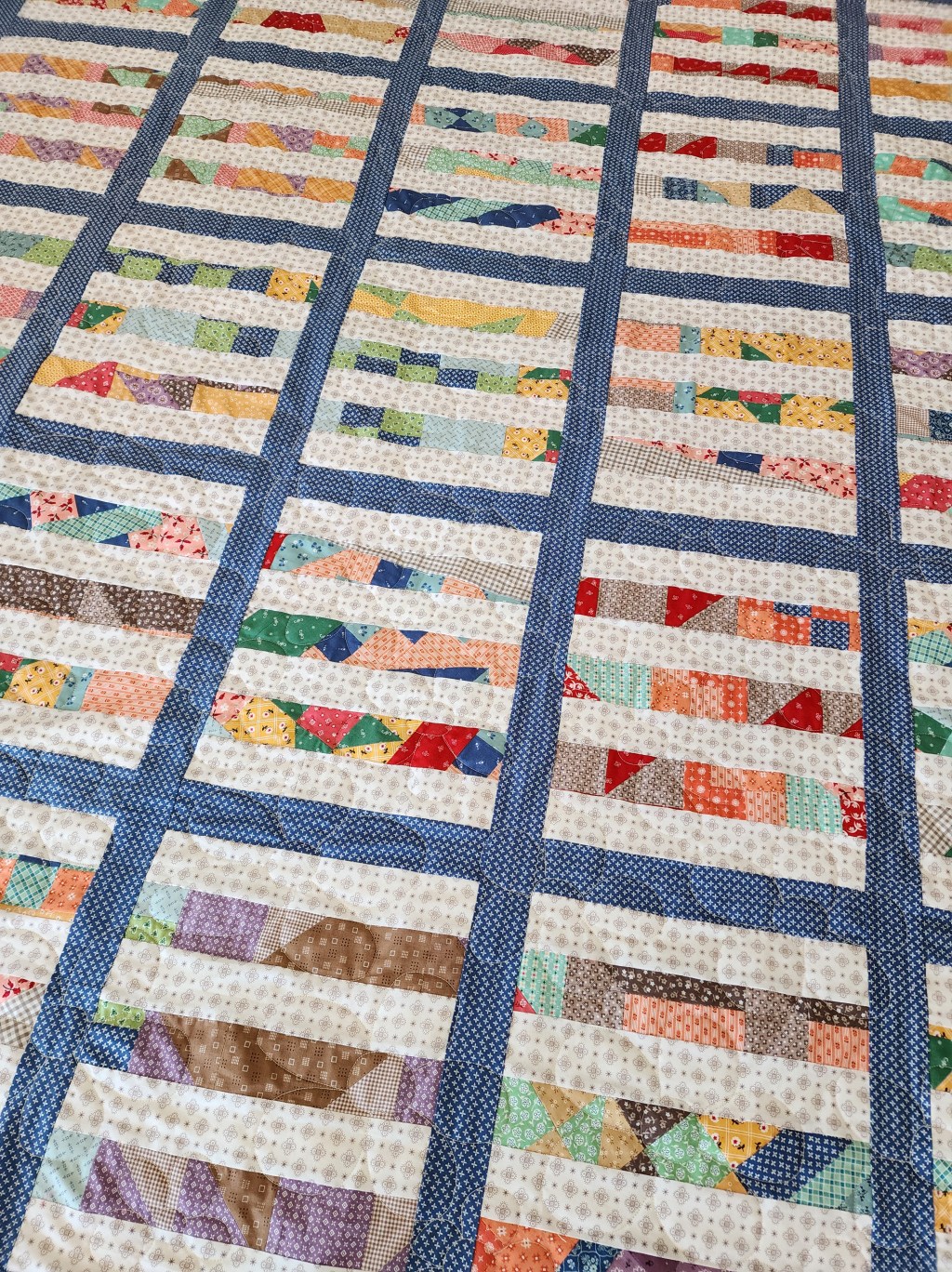
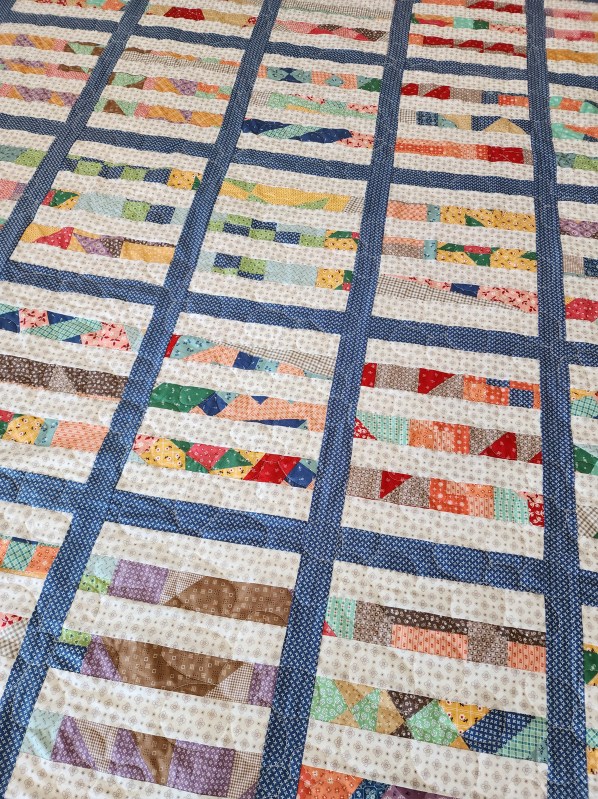
My ugly quilt was the product of a mystery quilt-along gone wrong. The blocks turned out to be a random collection of designs where some were pieced and some were appliqued. The block names connected each block to the other, but the block designs didn’t make sense for the names. I also found more than one math error in the pattern, probably because the blocks were all unique sizes. None of the blocks seemed to relate to each other.
In the end, I wondered if the designer pulled together leftover blocks from various projects in the past and slapped a name on each block to make them seem cohesive. Eventually, I concluded that the designer needed to maintain engagement with the fans, but didn’t take the time to plan a great quilt-along.
Other participants remarked on the math errors and lack of cohesion so I wasn’t alone in my feelings about the project. Though I didn’t share my frustrations, I decided to learn something from the experience. However, my first and only mystery quilt-along ruined my enthusiasm for surprise endings.
Block Design and Cohesion
One of the most important lessons I learned was related to block design. The quilt blocks in this project were too varied and lacked cohesion.
The connection between the blocks was weak, making it seem as though each block was created independently and then assembled together without much thought about how they would work as a whole. For example, two of the blocks featured appliqué, while the remaining blocks—about twenty-four in total—did not include any appliqué at all. Even the appliquéd blocks seemed unrelated to each other, let alone to the rest of the quilt.
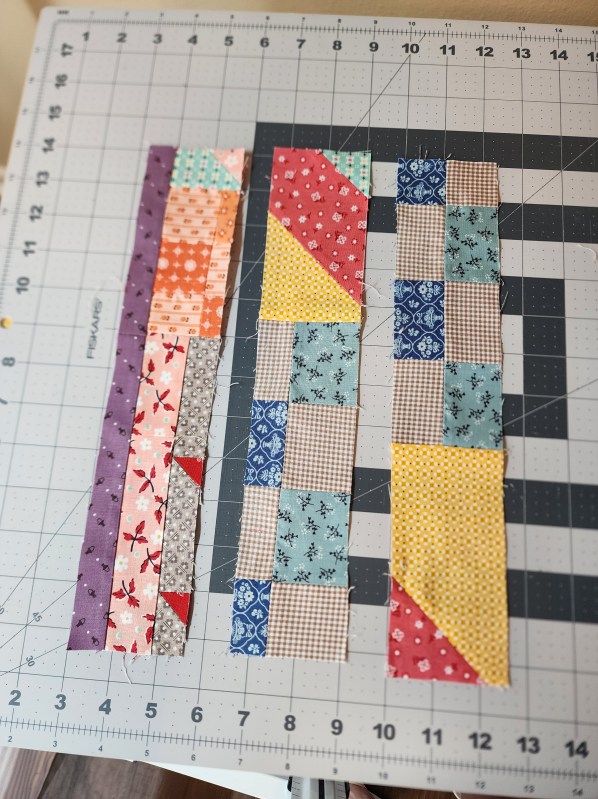
The remaining blocks represented abstract ideas, using traditional patterns. Each block seemed random without a unifying theme or visual connection, especially since they were all unique sizes. As a result, the quilt lacked a sense of harmony, and the individual blocks did not complement each other. The background was nonexistent in some blocks and only used to size up some of the smaller blocks.
This experience taught me that I like to have some cohesion and I’m more sensitive to good design than I would’ve thought. I’m learning. I’m growing. I’m becoming more discerning with my quilts. I want them to appeal to me.
Choosing Colors and Fabrics
My approach to color selection was also a learning point. I purchased a fat quarter collection and used almost the entire collection to make the blocks. The fat quarter collection was large and there were a large number of blocks.
The collection itself was diverse in both color and design, but using so many different fabrics together resulted in a quilt that looked visually disconnected and overly scrappy. Although the colors did not clash, the overall effect was chaotic, which is not the style I enjoy. I realized that even if all the fabrics come from one collection, using too many of them can make the quilt look scrappy and uncoordinated.
From this, I learned that I personally prefer a simpler color palette. I now know that using between three and seven fabrics from a collection is ideal for me. A smaller number of fabrics gives me more of a harmonious feel in a quilt that I prefer. Using more than seven fabrics makes the design look too scrappy for my personal taste.
Going forward, I plan to limit my fabric choices to five or fewer for most projects, with only a few additional colors used as small accents or features. I want to avoid overwhelming my quilts with too many colors. I don’t want to use every crayon in a very large crayon box.
The differences between what I like and what other people like are becoming more evident to me. I’m glad other people like things I do not, but I’m also glad that I’m appreciating more deeply the choices that go into quilts.
Understanding Personal Preferences
This process taught me the importance of connection and restraint in quilt design. Many of my previous quilts turned out well because I worked with a very limited budget. I simply couldn’t afford to buy very many fabrics in a collection. Limited resources worked well with my personal preferences.
Now that I have more resources, I had to learn the value of restraint in both fabric selection and design. Having too many options can make it difficult to create something visually appealing, and appreciating simplicity is crucial.
When I looked at the finished quilt top I saw too much variety in both the block patterns and the fabrics. Additionally, I used fabrics that I did not truly appreciate in terms of color or design.
While some of the fabrics are attractive, they do not necessarily work well with the patterns I chose, and I am learning that I need to be completely happy with each fabric I use. Going forward, I want to buy and use only fabrics that I truly love, rather than settling for ones that are just “fine” or “okay.” I don’t need to buy a collection. I’ll buy only the individual fabrics I truly love in a collection.
Improving My Craft
This project highlighted the importance of studying art concepts such as design, color, and scale. Although I do not consider myself an artist, I believe I can learn and apply these ideas to improve my quilting projects.
My plan is to be more intentional with my color and fabric choices, as well as with the scale and placement of the prints I use, to create more appealing outcomes.
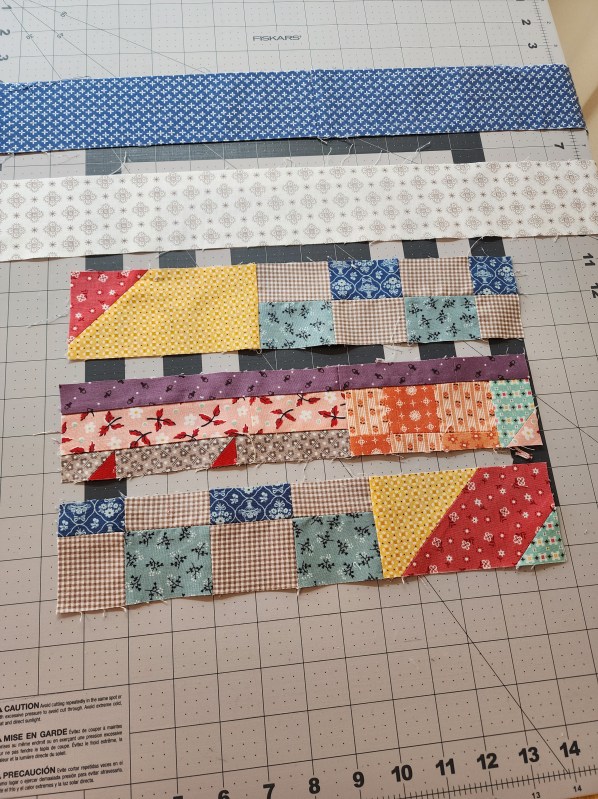
I’ve also realized that my color choices do not always align with decor preferences in my home or what the recipient of a quilt might enjoy. While I appreciate many colors, there are some I should not use in my quilts that go to somebody specific. I want to select colors and designs that reflect the tastes of the person who will ultimately own the quilt, even if that someone is myself.
Assessing the Finished Quilt
After completing the quilt top, I set it aside for a while before reviewing it again. From the beginning, I did not enjoy making the quilt, but I could not pinpoint the reason. Upon reflection, I realized that the overall look of the quilt was unattractive to my eye, and I could not think of any potential recipient who would proudly display it in their home. It simply didn’t work.
While some people value every quilt as a work of art, I do not.
I feel disappointed to have spent money and resources on a project that does not meet my expectations, but I view the experience as an important opportunity for growth of my skills.
Understanding My Style
Through this quilt along, I realized that scrappy quilts do not appeal to me. I prefer designs that are more intentional and cohesive. I want each fabric in a project to be something I genuinely enjoy and each pattern to be chosen carefully. I do not want to fill in spaces that I occupy with fabrics that are just adequate—I want every piece to contribute something beautiful to the final design.
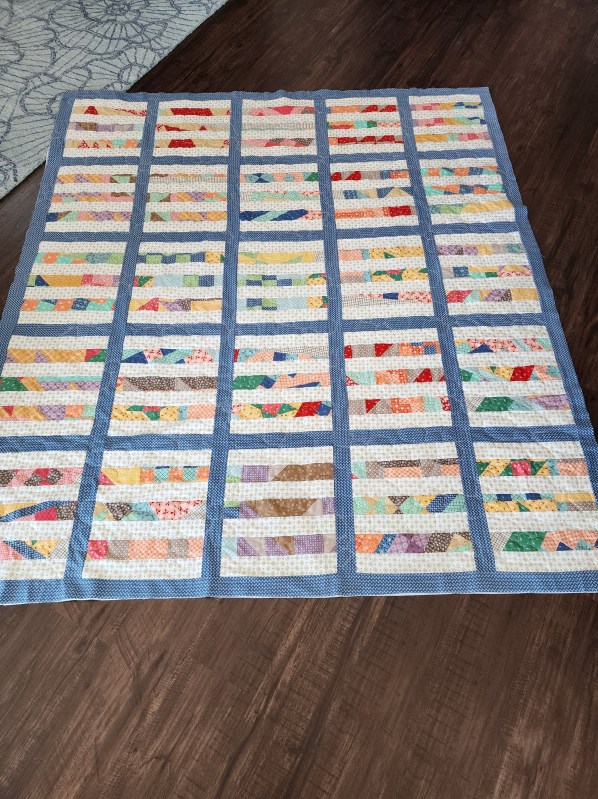
This experience taught me that I am not interested in mystery quilt along projects, where the outcome is unknown until the end. I prefer to have a clear vision of the final product so that I can make adjustments with intention. My quilts go somewhere and I want them to fit in where they go.
I am moving away from making quilts just to try new patterns. I’m returning to my roots of creating unique, personalized quilts that reflect the style and person’s life that receives the quilt.
This quilt along has been a valuable lesson in understanding my preferences, the importance of restraint, and the value of intentional design. While I may not consider myself an artist, I am committed to creating quilts that are unique, meaningful, and truly represent my vision. I’m glad that I completed the project and learned so much from it.
 Geri Quilted
Leave a comment